Longer PC Lifecycles: Why Physical Security Matters More for Enterprise Devices

AI PCs are emerging as a major direction in the next generation of personal computing. At the same time, rising memory and storage costs, combined with higher performance and hardware requirements for AI-enabled devices, are putting additional pressure on PC prices. For enterprises, the question is no longer simply when to adopt the latest generation of devices. Extending the useful life of existing PCs and reassessing replacement strategies are becoming increasingly important considerations in IT management.
According to Gartner's 2026 forecast, rising costs for key components such as DRAM and SSDs are expected to push average PC prices approximately 17% higher than in 2025, while the lifespan of PCs purchased by enterprise buyers is expected to increase by around 15%. Gartner's September research on Device Lifecycle also highlights how hardware costs, memory supply constraints, and the rapid evolution of AI PCs are reshaping traditional enterprise device lifecycle strategies.
As device costs increase, PC replacement is becoming less tied to a fixed refresh cycle. Organizations are looking more closely at how to extend the value of existing devices while managing multiple generations of IT assets. As devices remain in service longer, performance, maintenance, and software updates are not the only considerations. Maintaining appropriate physical security throughout a longer device lifecycle is also becoming an important part of device management.

From Fixed Refresh Cycles to
More Flexible Device Lifecycle Strategies
Traditionally, enterprises have followed relatively predictable PC refresh cycles based on device age, performance requirements, and IT budgets. As hardware costs rise and technology evolves more rapidly, however, this approach is becoming more complex.
New AI PCs continue to enter the market, requiring organizations to determine which workloads and users genuinely benefit from greater AI computing capabilities. At the same time, existing PCs that continue to meet everyday business requirements may not need to be replaced immediately. As a result, enterprise device management is gradually shifting from a simple "replace every few years" model toward a more flexible lifecycle strategy.
Refresh cycles may also vary across departments. High-performance users may receive newer devices first, while general office PCs remain in service longer. Some devices may be reassigned to different users, departments, or applications instead of being retired.
This creates a more diverse enterprise IT environment, where new AI PCs, high-performance laptops, and existing devices may remain in use side by side. Different brands, generations, and hardware configurations may also need to be managed over longer periods.
Device Lifecycle is therefore no longer simply a schedule for purchasing and replacement. It encompasses the entire journey of an IT asset, from procurement and deployment to daily use, maintenance, reassignment, and eventual retirement. As lifecycles extend, the challenge is to keep each device useful, manageable, and appropriately protected throughout its time in service.

As IT Assets Stay Longer,
Security Needs to Extend with Them
When organizations think about PC security, data encryption, access control, endpoint security, and broader cybersecurity measures often come first. Yet laptops, monitors, desktop computers, and other endpoint devices are also valuable physical assets.
This becomes particularly relevant as enterprises deploy more AI PCs, high-end laptops, and specialized devices. Their value extends beyond the initial hardware investment to include software environments, user configurations, business data, and the time and resources required to replace or reconfigure a device.
When these devices are deployed in open offices, shared workspaces, schools, retail environments, showrooms, or other publicly accessible areas, Physical Security becomes another important layer of IT Asset Protection.
Digital security protects the data and systems within a device, while physical security helps protect the device itself against unauthorized movement or removal. The two serve different purposes, but together contribute to a more complete approach to enterprise device security.
As PC lifecycles extend, devices may also move between users, locations, departments, and applications. Physical security measures therefore need to be reassessed as deployment conditions change. Put simply, when devices stay in service longer, physical security needs to support them for longer as well.
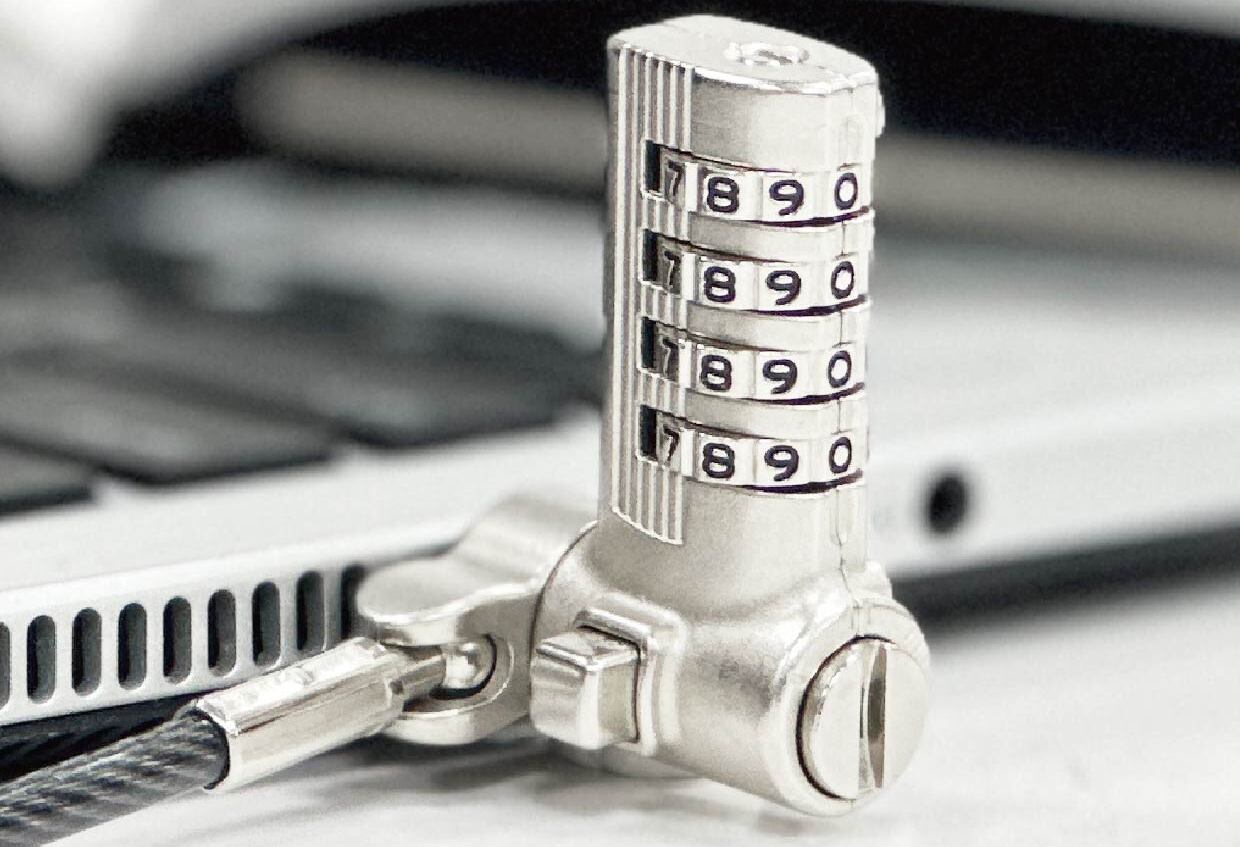
More Device Designs
Require More Flexible Physical Security
Longer lifecycles are only part of the picture. Laptop hardware itself is also changing.
As devices become thinner and more compact, the market has moved beyond a single Security Slot standard. Depending on the brand and product line, laptops may use Standard, Nano, or Wedge security slots, while devices such as certain MacBook models may not include a traditional Security Slot at all and require a different approach to physical protection.
As multiple generations of PCs remain in use side by side, IT teams may need to manage a mix of brands, Security Slot formats, and device structures within the same environment.
Management requirements can also vary. Individual users may prefer combination locks that eliminate the need to manage physical keys, while enterprises, educational institutions, and large-scale deployments may place greater emphasis on key management, Master Key Systems, and compatibility across different device specifications.
As a result, Physical Device Security is becoming less about simply choosing a laptop lock and more about selecting the right solution based on device structure, deployment environment, and management requirements.
To address these different scenarios, SINOX continues to develop computer security solutions with different locking mechanisms, operating methods, and management options, providing greater flexibility across device types and generations.
-
__26J138NrPG.jpg "SINOX RL2010 MacBook Pro Security Lock")
RL2010 MacBook Lock
Designed around the physical structure of selected 14-inch and 16-inch MacBook Pro models, uses an adjustable securing mechanism to provide physical protection without relying on a traditional Security Slot. Its low-profile design also helps preserve the space needed for everyday device use.
-
__26J13j4HHy.jpg "SINOX RL3018 Universal Combination Laptop Lock")
RL3018 Universal Laptop Lock
Features a 3-in-1 design compatible with three common Security Slot formats: Standard, Nano, and Noble Wedge. Its resettable four-digit combination eliminates the need to manage a physical key, making it suitable for individual work devices as well as environments where different laptop specifications need to be supported.
-
__26J13bNbz4.jpg "SINOX RL3017 Universal Keyed Laptop Lock")
RL3017 Universal Laptop Lock
Features a 3-in-1 design for Standard, Nano, and Noble Wedge Security Slots, with key operation and Push-to-Lock functionality. For enterprises, educational institutions, and other large-scale deployments, a Master Key System can further support centralized device security and management.

Rethinking Enterprise Device Security Across the Device Lifecycle
As Device Lifecycles extend, physical security should be considered as more than an accessory added at the time of purchase. The right solution needs to work with the device structure, deployment environment, and management requirements throughout a longer period of use.
From Standard, Nano, and Wedge Security Slots to MacBooks without traditional lock slots, and from individual work devices to large-scale enterprise and education deployments, device environments continue to evolve, and security requirements are evolving with them.
Since 1978, SINOX has built extensive experience in locks, security mechanisms, and computer security products. Beyond its existing Computer Security Solutions, SINOX works with global customers through OEM, ODM, and JDM collaboration, supporting product design, mechanical integration, testing, validation, and manufacturing to develop security solutions for different devices, markets, and applications.
From a single laptop to a diverse enterprise IT environment, physical security needs to evolve alongside Device Lifecycle strategies and real-world deployment requirements. SINOX continues to explore new possibilities for physical device security based on real-world needs, advancing its vision of becoming a global leading security solutions provider.